

Since 1995
Three decades of
one of a kind.
The Atelier
Above the lanes of Tripolia Bazar.
Palishhka began in 1995 as a family workshop in the old walled city of Jaipur. From an atelier above Tripolia Bazar, we have spent three decades making polki and jadau jewellery for boutiques across India.
We do not produce lines or repeats. Every design is drawn once, made once and sold once, so the piece a boutique carries from us exists nowhere else. Each one is drawn, engraved, enamelled, set and finished by craftspeople we know by name.
What is polki?
The diamond as it leaves the earth.
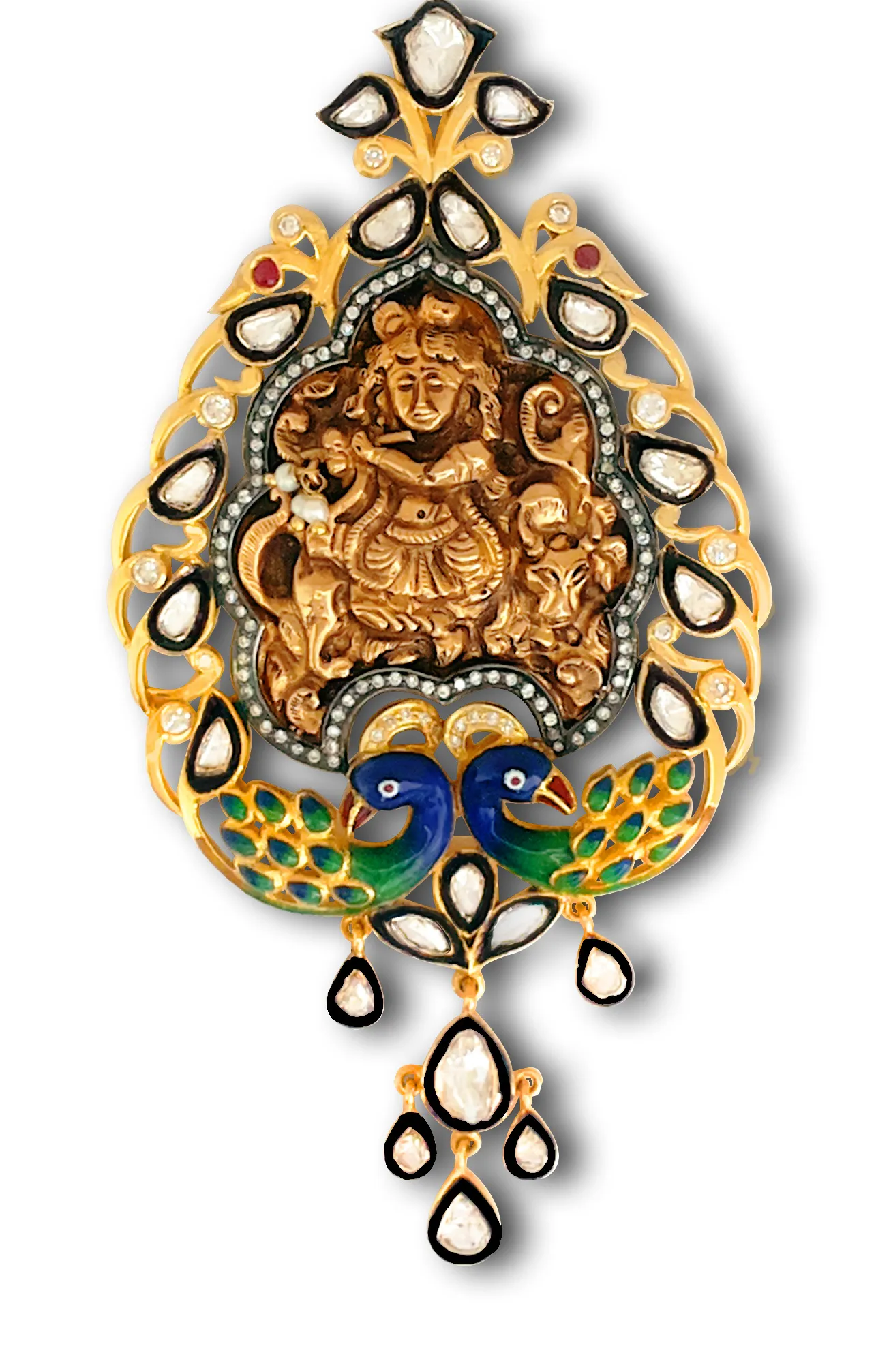
Polki is the uncut, unpolished diamond: cleaved along its natural planes and set with its rough face up, so the stone keeps the soft, watery light it had in the ground. Where a brilliant-cut diamond flashes, polki glows.
The craft reached its height in the Mughal courts, and Jaipur became its home and remains so. Each polki stone is backed with silver foil to draw light through the rough face, then set in gold using the kundan technique: pure, soft gold pressed around the stone by hand, without claws or heat.
Meenakari
Painting with fire.
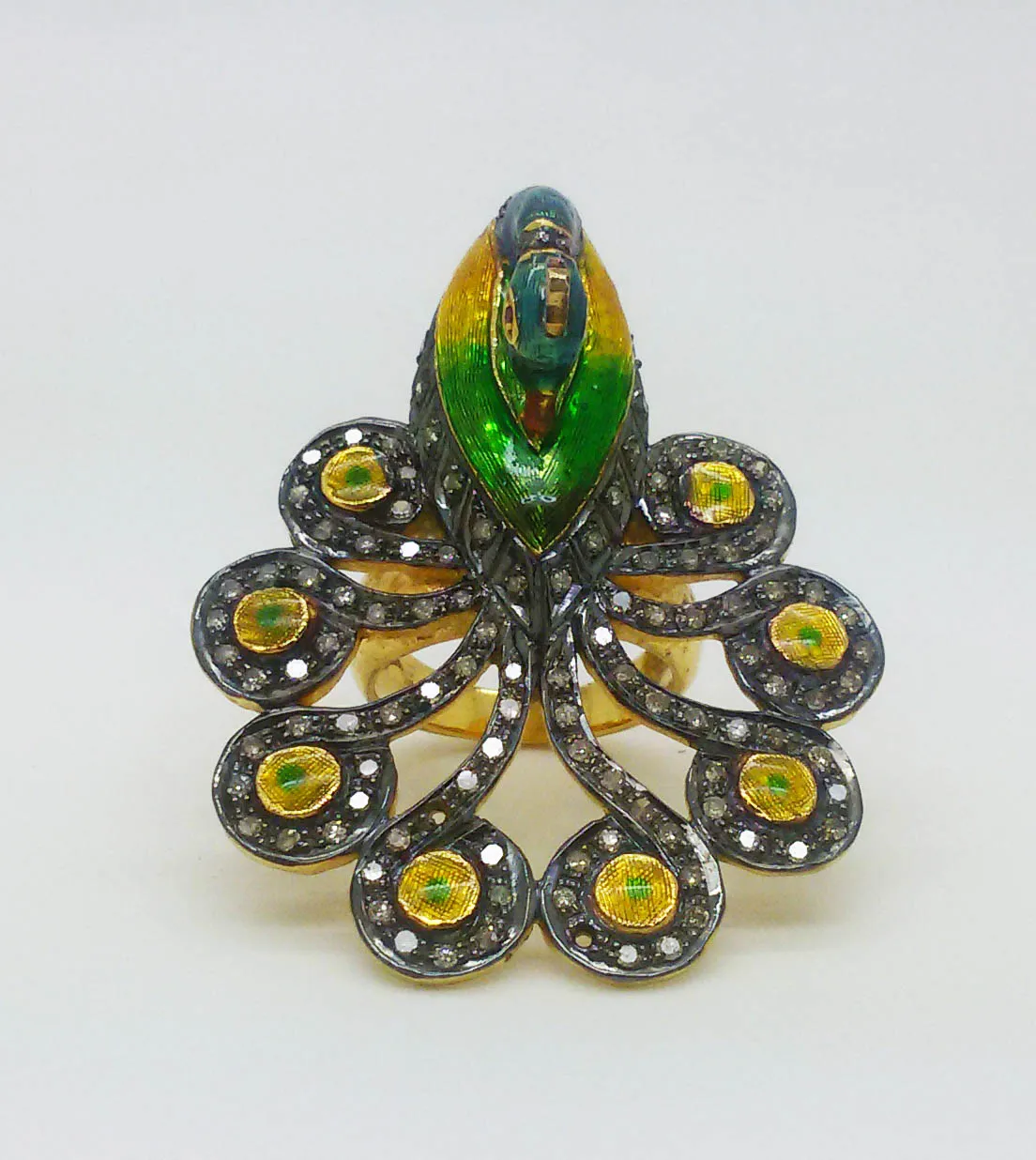
The reverse of a great Jaipur piece is often as beautiful as its front. Meenakari is the art of enamelling gold and silver in jewel colours, fired layer by layer in a kiln. Reds, greens and blues are ground from mineral pigment, painted into engraved metal, and fused at temperatures only an experienced hand can judge.
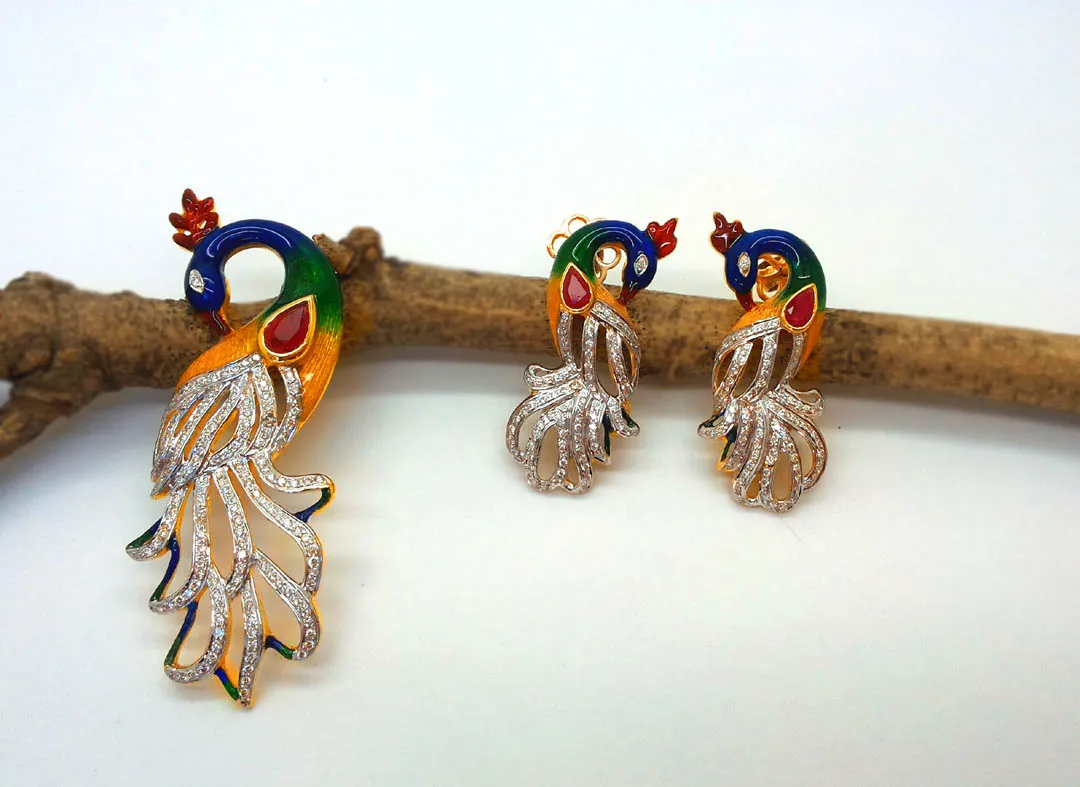
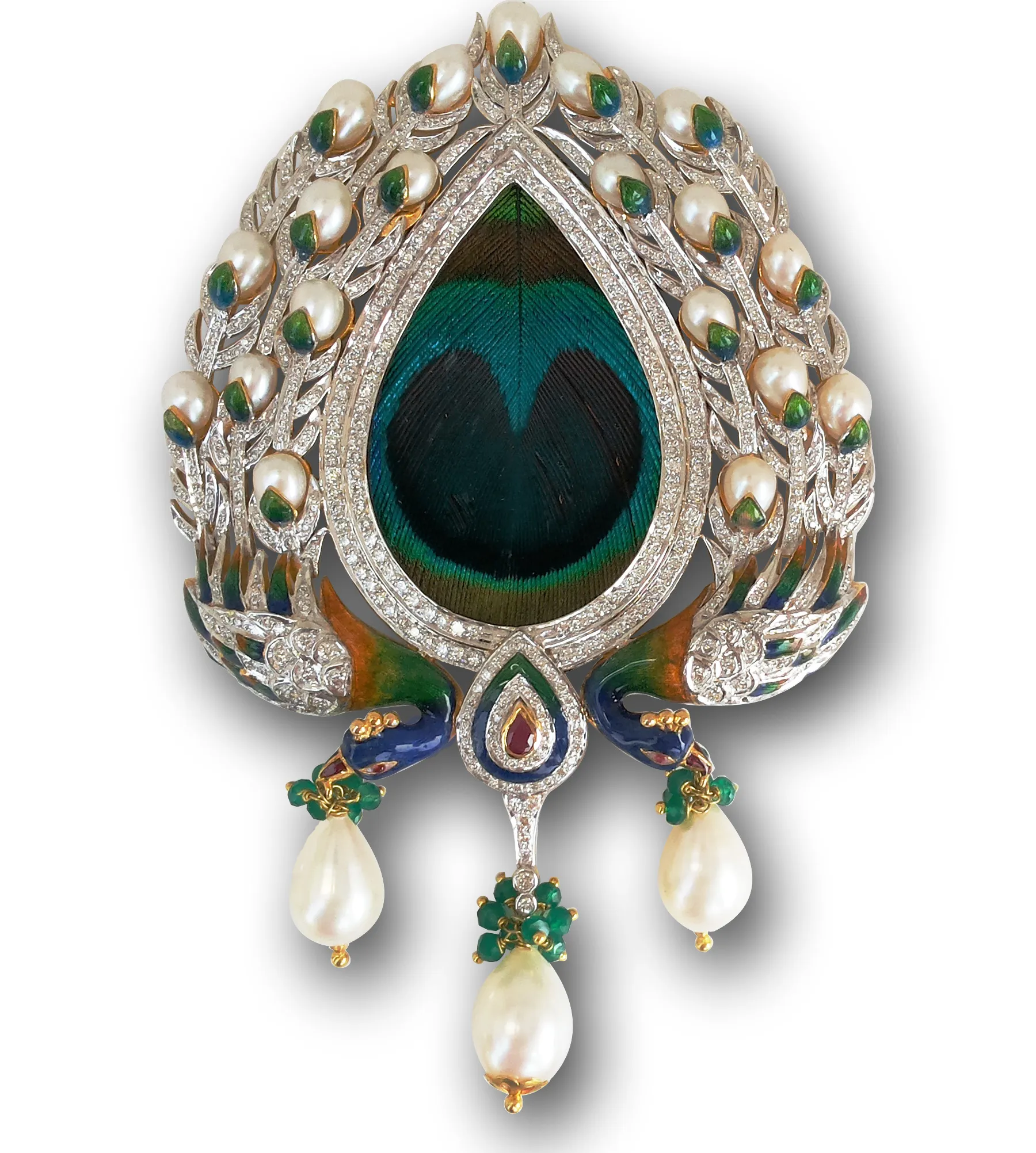
The peacocks, fish and flowering vines across our catalog are all hand-painted meenakari. No two pieces are ever entirely alike.
The Craft
Five stages,
many hands.
Jadau is jewellery built layer by layer. No casting, no moulds: a drawing becomes a frame, the frame is engraved, the engraving takes enamel, and only then are the stones set. Several specialists touch every piece before it is finished.
-
Chitrai
The drawing
Every piece begins on paper. A designer draws the form at full size, balancing stone against enamel and weight against fall. The drawing is made once and never used again.
-
Ghaat
The frame
The goldsmith raises the ghaat, the skeleton of the piece, from sheet and wire. No casting and no moulds: the form is shaped, joined and trued entirely by hand.
-
Khudai
The engraving
The engraver carves the pattern into the metal, cutting the beds that will hold enamel and stone. The depth of each cut decides how the colour will pool and glow.
-
Meenakari
The enamel
Mineral colours are ground, painted into the engraving and fired in the kiln, layer over layer. Each firing risks the one before it; only an experienced hand judges the heat.
-
Jadai
The setting
Uncut polki diamonds are bedded over foil and set in pure, soft gold pressed around each stone by hand, without claws and without heat. This is the jadau itself: the act of embedding.
The Two Houses
We keep two houses: gold polki, uncut diamonds in fine goldwork, and silver articles, gilded silver brought to life in meenakari colour.
Visit or write to us